| Before Washing |
Check the care label, turn the pants inside out, close zippers, and remove loose items from pockets. |
Reduces friction, snagging, and surface abrasion during washing. |
Washing with abrasive items, open hooks, or rough towels. |
| Water Temperature |
Use cold or lukewarm water, generally up to 30°C, unless the care label specifies otherwise. |
Lower temperatures help limit shrinkage, dye fading, and stress on elastic fibers. |
Hot water and sudden temperature changes. |
| Hand-Washing Method |
Soak briefly in cool water with a small amount of mild liquid detergent. Gently press and move the fabric for about 5 minutes, then rinse thoroughly. |
Gentle handling produces less mechanical stress than vigorous scrubbing. |
Twisting, wringing, brushing, or prolonged soaking. |
| Machine-Washing Cycle |
Select a delicate, gentle, or synthetics cycle with a low or moderate spin setting. |
Shorter, gentler cycles reduce stretching and friction. |
Heavy-duty, hot, or extended wash cycles. |
| Laundry Bag |
Place the pants in a fine-mesh laundry bag before machine washing. |
Helps reduce rubbing against the drum and contact with fasteners. |
Overfilling the bag, which prevents proper cleaning and rinsing. |
| Detergent |
Use a small measured dose of mild liquid detergent suitable for synthetic or delicate fabrics. |
Liquid detergent rinses readily and can be less abrasive than undissolved powder. |
Excess detergent, bleach, and harsh stain removers unless the care label permits them. |
| Fabric Softener |
Skip fabric softener for performance-focused yoga pants unless the garment instructions specifically allow it. |
Residue may coat fibers and reduce moisture-wicking or odor-control performance. |
Using softener at every wash. |
| Rinsing |
Rinse until the water runs clear and no slippery detergent residue remains. |
Prevents residue buildup that can affect texture, breathability, and odor. |
Leaving detergent trapped in thick seams or waistbands. |
| Removing Excess Water |
Press the garment gently between clean towels or use a low-spin cycle. |
Avoids strain on seams and elastic caused by twisting. |
Wringing or pulling the pants while saturated. |
| Drying |
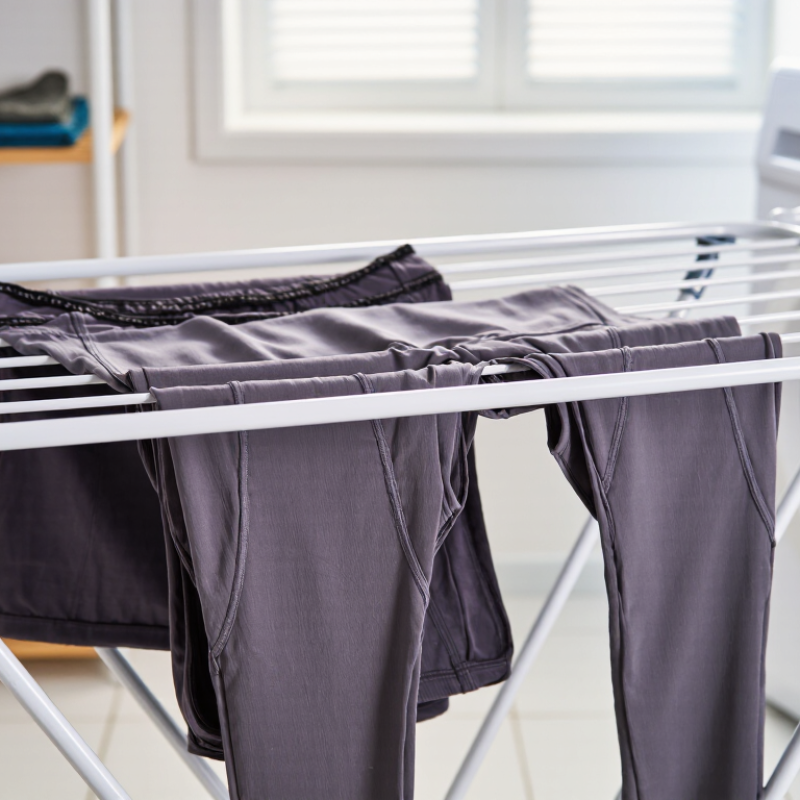
Air-dry flat or hang from the waistband in a shaded, well-ventilated area. |
Air drying reduces heat exposure and helps preserve stretch and shape. |
Direct sunlight, radiators, and high-heat tumble drying. |
| Ironing |
Do not iron unless the care label permits it; if permitted, use the lowest heat setting. |
High heat can damage synthetic fibers and elastic components. |
Direct high heat on stretch panels, prints, or bonded seams. |
| Washing Frequency |
Wash after each sweaty workout; lightly worn pants may be aired briefly before the next use if odor-free. |
Prompt washing removes sweat, body oils, and bacteria that can contribute to odor and fabric wear. |
Storing damp or sweaty pants in a closed bag or hamper. |
 DYR Fashion