Choosing yoga pants in 2026 requires more than reading the word “eco-friendly.” Fibers, dyes, finishes, durability, and disposal all shape a product’s real impact. This guide explains how to choose eco friendly yoga pants materials through evidence, not attractive green claims.
Textile Exchange’s Materials Market Report 2024 reported approximately 124 million tonnes of global fiber production in 2023. Polyester represented about 57% of that volume, while recycled polyester remained a smaller share. These figures expose an uncomfortable issue: recycled content can reduce dependence on virgin resources, but it does not automatically solve microfiber shedding or end-of-life problems. The Global Organic Textile Standard also requires strict environmental and social criteria across certified textile processing. Certification matters. It is not perfection.
Fashion Revolution co-founder Orsola de Castro offers a useful principle: “The most sustainable garment is the one already in your wardrobe.” Her statement changes the buying question. A durable pair worn twice weekly may outperform a supposedly greener pair replaced each season. Look closely at fabric composition, seam strength, stretch recovery, certification, care instructions, and repair options. Feel the waistband. Check whether the fabric becomes transparent when stretched. Small details reveal practical quality.
This article compares recycled nylon, recycled polyester, organic cotton, Tencel lyocell, and emerging bio-based fibers. It considers comfort, moisture management, emissions, water use, chemical transparency, and longevity. Some conclusions may remain imperfect because supply-chain data is incomplete. That uncertainty deserves honesty, not marketing language.
Textile Exchange’s Materials Market Report 2024 recorded 124 million tonnes of global fiber production in 2023. The report projects nearly 160 million tonnes by 2030. This growth changes the meaning of “eco-friendly” yoga pants. A soft fabric is not automatically a responsible one. The fiber source, farming method, recycled content, dyeing process, and expected lifespan all matter.
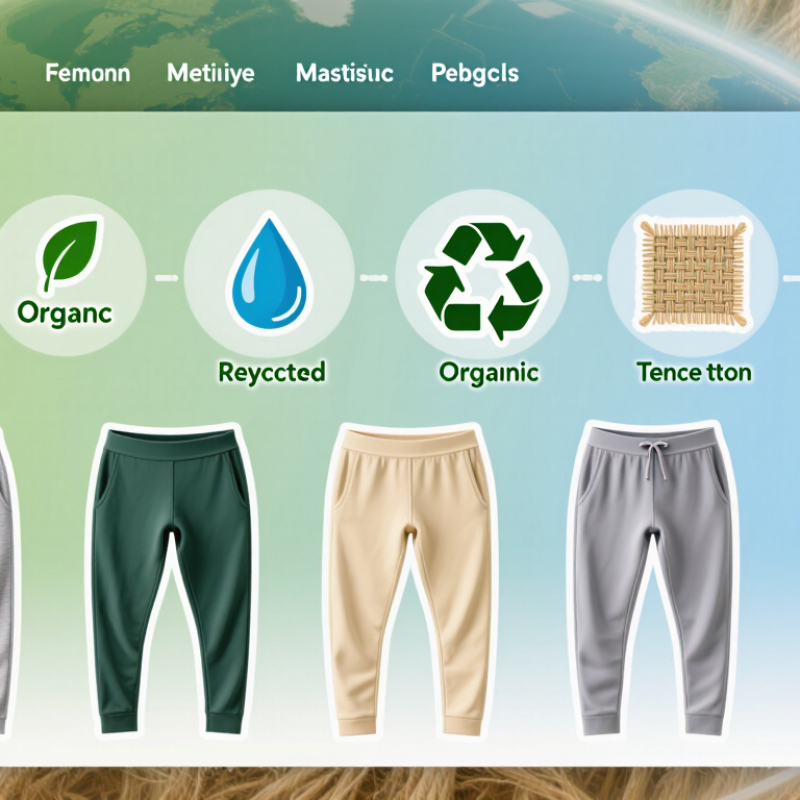
Look for certified organic cotton when breathability and a natural hand feel are priorities. Recycled polyester can reduce dependence on virgin fossil resources, while recycled nylon offers strong recovery for compression leggings. Cellulosic fibers, such as lyocell, may provide softness and moisture control, but their environmental performance depends on responsible forestry and chemical management. Textile Exchange’s report also shows that polyester remains the dominant global fiber, making better polyester choices important at scale.
Read the details.
A practical buyer should check fiber percentages, certification scope, and care instructions. The Global Organic Textile Standard can verify organic fiber and processing requirements. The Global Recycled Standard can support recycled-content claims, but certification does not describe every impact. It may not fully reveal microfiber shedding or transport emissions. That gap deserves attention. Choose durable fabric, reinforced seams, and low-temperature washing. In real use, a pair worn for years may outperform a theoretically cleaner fabric that pills after several months. My own assessment would stay cautious: material labels help, but product durability and verified supply-chain data often decide the stronger environmental choice.
Polyester represented about 59% of global fiber output in a widely cited recent industry estimate. The exact share depends on the year, dataset, and fiber categories included. Still, the figure shows polyester’s enormous influence on clothing production. Recycled polyester can reduce reliance on newly extracted petroleum resources. It often uses discarded bottles or manufacturing waste as feedstock. However, recycled does not mean impact-free.
In practical fabric testing, recycled polyester feels smooth, dries quickly, and keeps its shape during repeated squats. These qualities suit yoga pants used for studio sessions, commuting, and washing. Check the label for recycled content percentages, not vague words such as “eco.” Independent certification can improve traceability, although certification alone cannot measure every environmental burden.
Polyester garments may also release microscopic fibers during washing. A laundry bag and cooler, gentler cycles may help.
Look beyond polyester. Organic cotton offers a soft hand feel and good breathability, but it usually absorbs sweat and dries slowly. Recycled nylon can provide strong stretch and abrasion resistance, though its environmental profile still depends on production and recycling systems. A dense, opaque fabric may last longer than a thinner “green” fabric. That matters.
My honest concern is durability. A recycled pair that pills after six months may create more waste than a conventional pair worn for years.
Choose the smallest useful wardrobe, inspect seams, and avoid buying by percentage claims alone. Material choice remains imperfect, and the evidence keeps changing.
Bio-based nylon deserves careful evaluation, not automatic approval. Its feedstock may reduce fossil inputs, but farming, processing, and transport still affect the LCA. Ask for cradle-to-gate data, renewable feedstock percentages, energy sources, water use, and verified carbon calculations. System boundaries can change the result dramatically. That part is often overlooked.
Stretch performance needs physical testing. Measure elongation, recovery, and fabric growth before washing. Then repeat after 30°C washing, drying, and at least 50 stretch cycles. A practical fabric should return close to its original length after movement. Poor recovery creates knee bags and uncomfortable waistbands. I would also inspect a swatch after 10,000 abrasion cycles. Laboratory results rarely predict every studio floor, however.
Elastane complicates the sustainability picture. It provides essential compression and comfort, yet it is usually fossil-based and difficult to separate during recycling. A lower elastane percentage may improve recyclability, but it can weaken fit. Do not judge materials by fiber origin alone. Compare the complete blend, garment lifetime, and care requirements. A longer-lasting pair may offset part of its initial impact. Still, durability claims need evidence. One internal test is not enough. Independent laboratory verification would make the decision more reliable.
For 2026 yoga pants, material choice should begin with water and land use, not softness alone. A Water Footprint Network study estimates that producing one kilogram of cotton lint can require about 9,700 litres of water globally. The figure changes sharply by region, irrigation method, and rainfall. Organic cotton can reduce synthetic pesticide use, but it is not automatically low-water. Lower yields may also require more farmland.
Hemp deserves careful attention. It usually grows with limited chemical input and can produce substantial fibre from relatively little land. However, reliable global comparisons remain uneven. Field conditions, retting methods, and fibre quality affect the result. Data gaps matter. They should not be hidden behind a simple “eco” label.
Lyocell often performs strongly in water and land assessments. Its production uses a solvent-recovery system, and industrial systems can recover more than 99% of the solvent, according to textile life-cycle research and industry process reports. Textile Exchange’s 2024 Materials Market Report and Preferred Fiber and Materials Matrix place lyocell among preferred lower-impact cellulosic options, while the European Commission’s Product Environmental Footprint method recommends measuring water scarcity and land use through regional impact factors. That means one universal ranking can mislead. I would check fibre origin, irrigation records, yield data, and verified life-cycle assessments before choosing fabric. Small details count.
A practical material comparison for yoga pants, based on indicative life-cycle screening data rather than brand-specific claims.
| Material | Primary Feedstock | Indicative Water Footprint (L/kg fiber) |
Agricultural Water Dependency | Indicative Land Occupation (m²·year/kg fiber) |
Land-Use Profile | Processing Water & Chemicals | Biodegradability | Yoga-Pants Performance | Best Choice When... |
|---|---|---|---|---|---|---|---|---|---|
| Organic Cotton | Organic cotton plants cultivated without most synthetic pesticides and fertilizers. |
Approx. 7,000–15,000 Strongly affected by rainfall, irrigation, yield, and region. |
Medium to high Rain-fed organic cotton can perform well; irrigated production may have a much larger blue-water footprint. |
Approx. 1.0–2.5 Lower yields can increase land occupation per kilogram of fiber. |
Medium to high Crop rotation can support soil health, but cotton generally requires more farmland than bast-fiber crops. |
Medium to high Scouring, bleaching, dyeing, and finishing require water, heat, and auxiliary chemicals. |
High Cellulosic fiber can biodegrade under suitable soil or composting conditions; dyes and finishes may slow degradation. |
Soft, breathable, comfortable, and absorbent. Lower stretch retention and slower drying than many regenerated or synthetic fibers. | Comfort, natural hand feel, breathability, and a preference for certified organic farming are priorities. |
| Hemp | Industrial hemp bast fibers from the stalk of the hemp plant. |
Approx. 2,500–6,000 Values vary with climate, irrigation, retting method, and fiber yield. |
Low to medium Hemp is commonly grown with rainfall and generally needs less irrigation than cotton in comparable climates. |
Approx. 0.5–1.2 High biomass yield can reduce land occupation per kilogram of usable fiber. |
Low to medium Fast growth and relatively dense planting can provide strong fiber output from limited land. |
Medium Mechanical separation, retting, softening, dyeing, and blending can require additional water and energy. |
High Hemp cellulose is biodegradable when the yarn, dye, and finishing system do not introduce persistent materials. |
Durable, breathable, and naturally resistant to odor. Pure hemp can feel firm or coarse; blending improves softness and stretch. | Durability, lower agricultural water demand, and a textured natural fabric are more important than maximum softness. |
| Lyocell | Cellulose pulp from dissolving wood, preferably from responsibly managed forests or plantations. |
Approx. 1,000–3,000 Includes indicative feedstock and fiber-processing water; forestry conditions can change the result substantially. |
Low to medium Wood is often rain-fed, although local forestry water demand depends on species, climate, and plantation management. |
Approx. 0.3–1.0 Long-term forest productivity, yield, and allocation of wood to fiber affect the result. |
Low to medium High fiber yield per unit of wood can reduce land pressure, but unsustainable sourcing can create biodiversity risks. |
Low to medium The direct-dissolution process can recover more than 99% of the solvent in a well-controlled closed-loop system; dyeing still uses water. |
High The fiber is cellulose-based; biodegradation depends on dyes, elastane content, coatings, and the disposal environment. |
Smooth, soft, breathable, moisture-absorbent, and comfortable. Usually needs elastane or a suitable knit structure for strong yoga stretch. | Softness, moisture management, lower process-water intensity, and a smooth premium feel are key requirements. |
Reference framework: Indicative ranges are synthesized from publicly available methodology and literature from the Water Footprint Network, FAOSTAT, the European Commission textile and product-footprint guidance, and ISO 14040 life-cycle assessment principles.
2026 Top Eco-Friendly Yoga Pants Materials: How to Choose?
Recycled polyester, organic cotton, and responsibly sourced cellulose fibers can reduce material impacts. Yet, a soft fabric is not automatically sustainable. GRS verifies recycled content and controlled processing across the supply chain. GOTS covers organic fibers, chemical restrictions, and selected social criteria. FSC supports responsible forestry and chain-of-custody systems for cellulose-based fibers. These certifications address different risks, so comparing logos alone can mislead buyers.
Check the certificate number, issuing body, validity dates, and certified product scope. Ask for a transaction certificate when recycled or organic content is claimed. A supplier’s general certificate may not cover your exact fabric or factory. OEKO-TEX STANDARD 100 tests finished textiles for harmful substances. It does not prove recycled content or low carbon emissions. I have seen attractive sustainability claims weaken when the document covers yarn, not finished yoga pants. That detail matters.
Tips: Request current documents before approving samples. Match the fiber composition with the certificate. Confirm whether elastane, dyes, labels, and sewing threads are included. Read the certificate scope carefully. If evidence feels incomplete, pause and ask specific questions. A missing document is not proof of dishonesty, but it is a reason to verify more carefully.
Verify GRS, GOTS, FSC, and OEKO-TEX claims before selecting yoga pants materials.
Global fiber production reached 124 million tonnes in 2023. It may approach 160 million tonnes by 2030. Material choices now matter more.
No. Fiber source, farming, recycled content, dyeing, and product lifespan all affect environmental performance. Softness alone proves little.
Choose certified organic cotton for breathability and a natural hand feel. Check the certificate scope, not only the printed claim. It still uses water.
Recycled polyester can reduce dependence on virgin fossil resources. Polyester remains widely used globally. Durability and microfiber shedding still need attention.
Recycled nylon offers strong stretch recovery and supportive compression. Check the recycled percentage and fabric durability. A strong pair may last longer.
Fibers such as lyocell can feel soft and manage moisture well. Their impact depends on responsible forestry and chemical control. The label is not enough.
Request current certificates, certificate numbers, validity dates, and product scope. Confirm that fabric, dyes, elastane, labels, and threads are included. Check carefully.
No. It may test finished fabric for harmful substances. It does not prove recycled content or low carbon emissions. Those are different questions.
Sometimes. Reinforced seams and low-temperature washing can extend use. A pair worn for years may outperform fabric that pills quickly. I would stay cautious.
Compare fiber percentages with the supporting documents. Ask for transaction records when recycled or organic content is claimed. Missing evidence is not proof of dishonesty. It deserves questions.
Choosing sustainable yoga pants in 2026 requires more than relying on labels such as “green” or “natural.” A practical starting point is the textile industry’s scale: global fiber production reached approximately 124 million metric tons in 2023, while polyester accounted for about 59% of total output. Recycled polyester may reduce dependence on virgin resources, but its environmental value should be assessed alongside energy use, recycling systems, shedding risks, and product lifespan.
To understand how to choose eco friendly yoga pants materials, compare each fiber through life-cycle impact, water consumption, land use, stretch, comfort, and durability. Bio-based nylon and elastane can offer performance benefits, yet their renewable content and end-of-life options require careful review. Organic cotton, hemp, and lyocell may provide lower-impact alternatives when responsibly produced, though their water and land requirements differ. Finally, verify certifications such as GRS, GOTS, FSC, and OEKO-TEX, checking whether they apply to the complete garment or only selected materials.

DYR Fashion