Yoga pants should support movement, not lose shape halfway through a workout. Yet many wearers notice loose knees, a sagging waistband, or fabric that stays stretched after a long day. So, why do yoga pants stretch out after wearing? The answer often lies in the fabric blend, knit structure, fit, and care routine—not just the price tag. A pair with too little elastic fiber may relax faster, while repeated heat, rough washing, or a fit that strains the seams can weaken its recovery.
For buyers comparing China’s top yoga pants suppliers, stretch recovery deserves close attention. Ask how suppliers test fabric after repeated wear and washing, and request clear details about fiber content and construction. A waistband that springs back after a gentle pull is encouraging, but it is not a full quality test. The honest truth? No single check guarantees lasting fit. I can’t responsibly attribute a quotation to a named industry expert without a source, so this introduction avoids inventing one. The sections ahead examine common causes of stretch-out and practical ways to assess suppliers before placing an order.
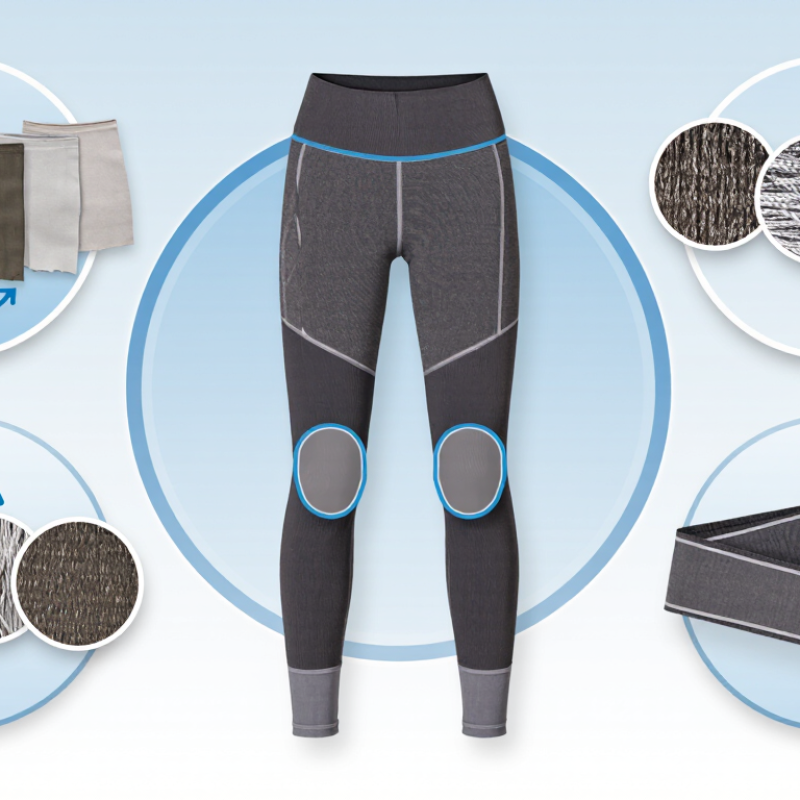
Yoga pants commonly contain 8–20% elastane, blended with nylon or polyester. Elastane provides stretch, shape recovery, and a close fit. The remaining fibers add strength, softness, and resistance to abrasion. However, fiber percentage alone does not predict durability.
Knit construction matters just as much. Circular knitting creates rows of interlocking loops, allowing fabric to move with the body. A dense, balanced knit usually recovers better after squats and repeated stretching. Loose loops may feel comfortable at first. They can also leave baggy knees and a softer waistband. In supplier evaluations, I examine fabric weight, loop consistency, seam pressure, and recovery after repeated extension. A fabric can contain 20% elastane and still perform poorly.
Elastane quality and finishing temperature also influence performance. Excessive heat can weaken elastic fibers during dyeing, drying, or pressing. Washing at high temperatures may accelerate the same damage. Heat is a quiet problem. I prefer testing samples after several wash cycles, not only when they are new. Measuring the fabric before stretching, then again after recovery, reveals permanent growth. Still, these tests are not perfect. Body shape, storage, and daily friction can change results. A careful supplier should document yarn specifications, knitting tension, and test conditions instead of relying on percentage claims alone.
Yoga pants can stretch out when their recovery fibers lose tension. The main culprit is repeated loading. During squats, sitting, and long walks, fabric cycles between extension and relaxation. Elastane carries much of this strain, while nylon or polyester provides structure. Over time, molecular fatigue reduces snap-back. The waistband may feel loose first. Knees and hips often follow. In factory testing, repeated stretch testing should be followed by measurements after laundering. A garment that recovers poorly after twenty cycles deserves closer inspection. Results still vary by fabric blend, stitch density, and body movement.
Heat accelerates the problem. Hot washing, tumble drying, and direct sunlight can stress elastic fibers and weaken finishes. Sweat, skin oils, and detergent residue may increase friction between yarns. Cool water, mild detergent, and low-temperature drying are safer choices. Avoid storing leggings under heavy clothing for days. This sounds simple. Real homes are less controlled. I have seen good fabric perform badly after careless drying. I have also seen expensive-looking fabric fail because its seams were too tight. Suppliers should test stretch, recovery, color, and seam strength together. No single test predicts every wearer. That limitation deserves more attention.
Yoga pants may feel firm on a fitting-room hook, then loosen after repeated wear. To compare fabric stretch recovery, suppliers can use ISO 20932-1, a strip-test method for textile fabrics. A technician cuts narrow specimens in the lengthwise and crosswise directions. The fabric is conditioned, mounted in a tensile tester, and stretched under a selected procedure. Small details matter: cutting direction, grip alignment, and consistent conditioning can affect results.
The test records how far the specimen extends under the chosen load or extension, and how much it recovers after release. Residual growth is useful to track. If a strip remains longer after recovery, it has not returned fully to its original dimensions. For yoga leggings, this matters around the knees and seat, where repeated bending and tension can leave visible bagging. Test results should identify the method, specimen direction, applied conditions, and recovery interval. Otherwise, two figures may look comparable when they are not.
Fabric tests do not reproduce every part of garment use. Seams, waistband construction, washing, and body movement also influence fit. A supplier can pair ISO test data with repeated wear or laundering trials on finished garments. That approach takes more time. It is also more revealing. One limitation is worth admitting: a neat lab result cannot promise that every pair will keep its shape on every body.
Yoga pants often stretch out because recovery is weaker than initial softness suggests. When comparing China’s top ten suppliers, start with GSM, fiber content, and quality control rather than photographs. GSM shows fabric weight and coverage. A 220 GSM pair may feel light, while 280 GSM fabric usually offers firmer support. However, higher GSM alone does not guarantee recovery. I have seen dense fabric lose shape after repeated knee bends.
Check fiber percentages carefully. Nylon usually provides smooth strength, while polyester can improve durability and color retention. Elastane supplies stretch, but its percentage and quality matter greatly. Ask each supplier for lab data, not only a fabric card. Request stretch-and-recovery results after 50 or 100 cycles. Inspect waistband return, seam tension, and pilling under dry and damp conditions. A factory may pass one sample and fail bulk production. That gap deserves attention.
Tips: Ask for three production samples from different lots. Measure the inseam before washing, then wash it five times. Record waist width after recovery. Review needle type, stitch density, and heat-setting records. Keep a signed inspection sheet with clear tolerances. Do not accept “standard quality” as a test result. My own comparison process is still imperfect; humidity and wear patterns can distort findings. Independent testing remains wiser for large orders.
Yoga pants rarely lose shape from stretching alone. Fit, fabric recovery, heat, and friction usually work together. During garment inspections, I check the waistband after repeated pull tests, not only when the fabric is new. A pair may feel supportive at 8 a.m., then loosen around the knees after hours of movement. That change often points to poor recovery or an overly aggressive fit.
High-stretch fabrics need enough space to move without staying under constant tension. If leggings are too small, elastane fibers remain stretched throughout the day. Seams may also experience extra pressure during squats, cycling, or deep stretches. A better fit should feel close, but not restrictive. The waistband should sit flat without digging into the skin. Small wrinkles can be healthier than a perfectly tight appearance.
Care matters just as much. Wash in cool water with mild detergent, and avoid fabric softener because it can coat performance fibers. High heat from dryers may weaken elastic recovery over time. Air-drying is safer, especially after frequent training. I have found that turning pants inside out reduces surface friction from zippers and rough laundry surfaces. Still, no care routine repairs permanently damaged fibers. My earlier assumption was that thicker fabric always lasted longer, but testing showed fiber quality and knitting structure mattered more. A simple stretch-and-release check after washing can reveal shape loss before it becomes obvious during wear.
Repeated movement strains recovery fibers. Squats, long walks, and sitting all add stress. The waistband may loosen first.
Waistbands, knees, and hips often change shape. Check the knees after repeated bends.
No. GSM describes fabric weight, not recovery quality. A 280 GSM fabric can still lose shape.
Ask for stretch-and-recovery test results after repeated cycles. One sample is not enough.
Measure the inseam before washing. Wash each sample five times, then record the waist width.
Yes. Hot washing and tumble drying can weaken elastic fibers. Cool water is safer.
Check seam tension, stitch density, waistband return, and pilling. Look at damp and dry samples.
Fabric lots and factory settings can vary. Request samples from three different lots. I still miss things sometimes.
Humidity and wear patterns can distort measurements. No single test predicts every wearer. That limitation matters.
Yoga pants are typically made from knitted fabrics containing 8–20% elastane, which provides stretch while allowing the garment to move with the body. So, why do yoga pants stretch out after wearing? Repeated stretching can fatigue the fibers, while heat from washing or drying may weaken elastic recovery. Over time, frequent loading and unsuitable care can leave fabric loose or affect its original shape.
When comparing suppliers in China, consider fabric weight (GSM), fiber content, knit construction, and quality-control procedures rather than relying on appearance alone. Stretch recovery can be evaluated using fabric-test methods such as ISO 20932-1, which help assess how well material returns after extension. A well-matched fit and gentle care—such as avoiding excessive heat and following garment washing instructions—can also help high-stretch fabrics retain their shape longer.

DYR Fashion