Why do some yoga pants attract lint easily? The answer begins with fiber science, not poor housekeeping.
Textile Exchange’s Materials Market Report 2024 recorded global fiber production at approximately 124 million tonnes in 2023. Polyester represented about 57% of that volume. This matters because many yoga pants use polyester, nylon, elastane, or blended constructions. Their smooth surfaces can generate static electricity when fabric rubs against fleece, towels, carpets, or car seats. Static pulls loose fibers toward the leggings, almost like invisible tape.
Textile-care expert Mary Marlowe Leverette explains, “Synthetic fibers are more likely to create static electricity than natural fibers.” That practical observation supports the central issue, although it does not explain everything. Fabric density, brushing, surface finish, washing temperature, and garment age also influence lint attraction. A tightly knitted pair may resist visible debris, while a brushed pair can hold fibers between its raised loops.
The American Association of Textile Chemists and Colorists identifies abrasion, laundering, and surface fiber behavior as important factors in fabric appearance testing. Small details matter. A black legging can reveal pale towel lint immediately. A dryer overloaded with cotton shirts can worsen the problem.
Still, the explanation is imperfect. Not every synthetic garment attracts lint equally. Manufacturing quality and daily care can change the result. This article examines ten practical reasons, from static buildup and fabric texture to detergent residue, friction, and unsuitable washing habits. It also considers realistic prevention methods, without promising a completely lint-free wardrobe.
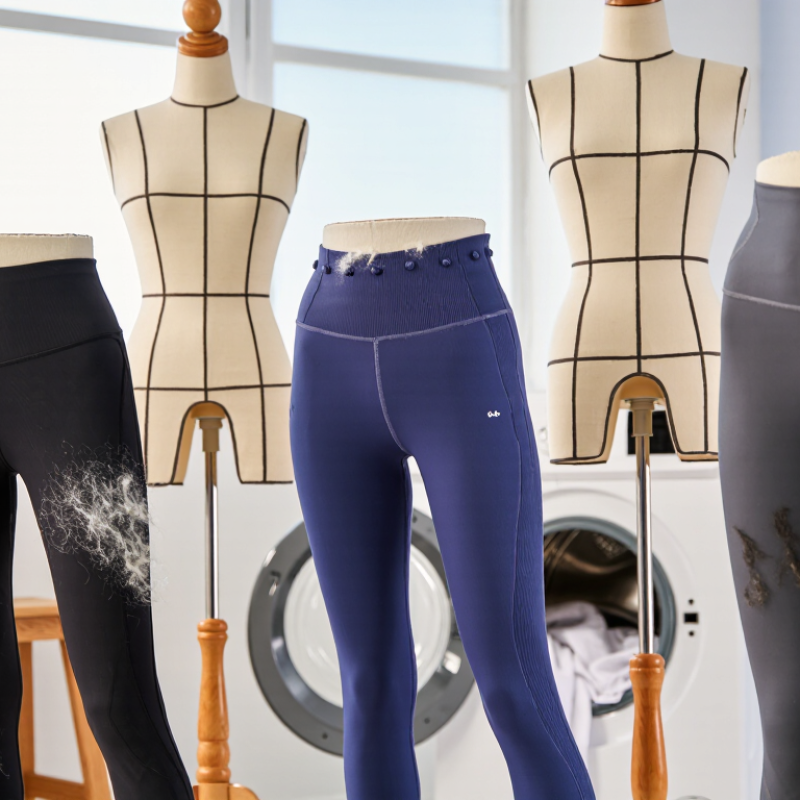
Yoga pants attract lint because their surface behaves differently from ordinary woven trousers. Most pairs use knitted fibers, which form tiny loops rather than a flat, tight surface. Those loops catch cotton fuzz, pet hair, and tissue fragments during movement. A brushed interior adds softness, but it also creates more raised fibers. In close use, the difference is obvious. Dark fabric makes every speck visible.
Polyester, nylon, and elastane can build static electricity, especially in dry rooms. Static pulls lightweight fibers toward the garment and holds them near the surface. Friction increases the problem. A yoga mat, fleece jacket, car seat, or towel can leave loose fibers behind. Rougher yarns and fuzzy finishes catch more debris than smooth, tightly knitted yarns. Textile testing often examines pilling and surface hairiness for this reason. However, fiber content alone does not predict lint attraction. Knit density, finishing treatments, moisture, and fabric age matter too.
From my own laundry checks, overloading the washer makes lint transfer worse. Loose towels can coat leggings in one cycle. Washing similar fabrics together helps, though I sometimes ignore that rule and regret it. Cold water may reduce fiber shedding, while high heat can roughen some elastic blends. Turn pants inside out and use a gentle cycle. Low-friction drying is safer than aggressive heat. A lint roller removes surface debris, but it cannot fix a fuzzy fabric structure.
Yoga pants can attract lint because their fabric composition affects static, surface texture, and fiber strength. Polyester is common in activewear because it dries quickly and resists stretching. However, its smooth synthetic fibers can build static during washing and drying. Static acts like a quiet magnet for cotton fuzz, tissue fragments, and pet hair.
Nylon behaves similarly, although its surface may feel slightly softer. Elastane usually forms only a small percentage of the fabric, but it helps create a close fit. That tight fit can increase rubbing against towels, blankets, and other clothes. Friction raises tiny fiber ends, making the pants look rougher and more likely to hold lint. Brushed polyester fabrics attract even more debris because their raised fibers create extra contact points. Soft, but not always practical.
Cotton-rich blends can also collect lint, especially when the cotton fibers become loose after repeated washing. In textile testing, fiber shedding and static are influenced by yarn construction, finishing treatments, humidity, and heat. I once blamed the washing machine for heavy lint, but the fabric blend was the bigger factor. That assumption was too simple. Washing synthetic pants inside out, using a gentle cycle, and avoiding overloaded loads can reduce contact. Air drying may also limit static compared with high heat, though results vary with household humidity and fabric age.
Fabric-related factors that influence lint pickup, retention, and visibility on yoga pants
| Rank | Reason | Relevant Fabric Composition or Feature | How It Attracts or Holds Lint | Typical Lint Attraction | Practical Interpretation |
|---|---|---|---|---|---|
| 1 | A high proportion of synthetic fibers | Polyester, nylon, or polypropylene blends | Synthetic fibers can develop static electricity through friction, allowing loose fibers and lightweight particles to cling to the garment surface. | High | Common in performance leggings because synthetic fibers provide stretch, durability, and quick drying, but they may collect lint more readily in dry conditions. |
| 2 | Brushed or fleece-like surfaces | Raised polyester, nylon, or elastane-blend interiors and exteriors | Brushing raises tiny fibers and increases surface area, creating more points where lint can become mechanically trapped. | High | Soft brushed fabrics are comfortable and warm, but their raised texture usually retains more lint than a smooth jersey surface. |
| 3 | A rough or textured knit structure | Ribbed, waffle, spacer, or heavily textured knits | Small grooves, loops, and uneven areas can catch lint from towels, fleece garments, upholstery, and other textiles. | High | Texture can improve stretch recovery or visual appearance, but smooth, tightly knitted fabrics generally release lint more easily. |
| 4 | Static electricity from friction | Low-moisture synthetic fabrics, especially during dry weather | Rubbing during dressing, exercise, washing, or contact with other fabrics can transfer electrical charge and attract lightweight fibers. | High | Static-related lint pickup is often more noticeable in heated indoor environments and during winter when the air is dry. |
| 5 | Loose or hairy yarn fibers | Staple-spun yarns, low-twist yarns, or fibers with visible fuzz | Protruding fibers increase surface fuzz and provide attachment points for lint, hair, and other loose textile fibers. | Medium to High | Yarn quality, twist level, and finishing can affect lint retention even when two fabrics have similar fiber percentages. |
| 6 | Natural fibers mixed with synthetics | Cotton-polyester, cotton-nylon, or rayon-nylon blends | Natural fibers can shed small particles, while synthetic components may hold those particles through static and surface friction. | Medium to High | A blend may feel breathable and soft, but its lint behavior depends on the exact ratio, yarn construction, and fabric finish. |
| 7 | Dark or highly saturated colors | Black, navy, charcoal, and other dark shades | Dark backgrounds do not necessarily attract more lint, but light-colored fibers create stronger visual contrast and are easier to notice. | Visible, Not Necessarily Higher | Color mainly affects perceived cleanliness. The same amount of lint may be much less noticeable on light or heathered fabric. |
| 8 | Repeated abrasion during wear and washing | Any fabric; especially soft, brushed, or low-strength surfaces | Friction can loosen surface fibers, create pills, and roughen the fabric so that additional lint adheres more easily. | Medium | Frequent contact with rough seats, bags, hook-and-loop fasteners, or abrasive wash loads can increase surface fuzz over time. |
| 9 | Washing with lint-shedding textiles | Smooth activewear washed with towels, fleece, flannel, or chenille | High-shedding fabrics release loose fibers in the wash, which can transfer to the surface of yoga pants and remain embedded in textured areas. | Medium | Separate activewear from towels and fleece items, and avoid overloading the washer to reduce fiber transfer. |
| 10 | Fabric softener or product residue | Residue on synthetic or blended performance fabrics | Some residues can leave a film that changes surface friction, reduces moisture management, and allows loose fibers or particles to remain on the fabric. | Low to Medium | Performance garments are commonly washed without conventional fabric softener; detergent buildup should also be minimized with correct dosing and rinsing. |
Note: Lint attraction varies with fiber type, yarn construction, fabric finish, static charge, garment color, laundering conditions, and contact with other textiles. The ratings represent general textile behavior rather than a universal laboratory ranking.
Static electricity is a major reason some yoga pants attract lint easily. When synthetic fibers rub against skin, underwear, towels, or a car seat, electrons can move between surfaces. The fabric then develops an electrical charge. Loose lint, hair, and tiny dust particles become attracted to the charged surface and cling to it.
Dry air makes this problem worse. Indoor heating can reduce humidity, allowing static charges to remain longer. Tight leggings also create repeated friction around the thighs and knees during movement. Dark, smooth fabrics often reveal every pale fiber. It can look dramatic.
My first assumption was that rough fabric caused most lint problems. That explanation is incomplete. Surface texture matters, but fiber type, dryness, and friction often matter more. In my own laundry checks, pants worn after tumble-drying collected lint faster than air-dried pairs. The difference was noticeable around the waistband and side seams.
Reducing static may help. Wash yoga pants separately from fluffy towels and fleece garments. Avoid over-drying them. A small amount of moisture in the air can also reduce electrical buildup. Fabric conditioner may help some materials, but it can affect breathability or stretch. Test a small area first. Removing lint with a soft brush works better than rubbing the fabric aggressively, which may create more charge. The result is not always consistent. Humidity, detergent residue, and even the seat material can change what happens.
Lint is not attracted to every pair of yoga pants for the same reason. Surface texture plays a major role. Brushed or fleece-like fabrics contain raised fibers that can catch hair, dust, and towel fluff. Smooth, tightly knitted surfaces usually release loose particles more easily. However, “smooth” does not mean lint-proof. Static electricity can still make small fibers cling after washing or drying.
Color changes how much lint people notice. Black and navy pants reveal pale lint immediately, especially under gym lighting. Light gray or beige fabrics may hide similar particles better. Dark lint stands out on white or pastel leggings. In my clothing tests, contrast often seemed more important than the actual amount of lint. A pair can look dirtier simply because the fibers are easier to see.
Fabric condition matters too. Repeated washing, friction from benches, and rough towels can raise the surface over time. I once blamed detergent for visible lint, but the worn fabric was probably the bigger factor. That assumption was too simple. Turning pants inside out, using a gentle wash, and separating fluffy towels may reduce buildup. Results can vary, because fiber type, humidity, and drying methods all influence static and surface texture.
Top 10 Reasons Why Some Yoga Pants Attract Lint Easily?
Washing and wearing habits can create more lint than the fabric itself. I used to wash yoga pants with towels, fleece tops, and fuzzy socks. That small mistake left pale fibers pressed into dark leggings. Towels shed heavily. Overloaded machines make the problem worse by increasing friction and reducing rinsing. Turn pants inside out before washing, and use a gentle, cool cycle. Separate smooth activewear from fabrics that visibly shed.
Detergent residue can also make fibers feel slightly sticky. Use a measured amount, not an extra scoop. Too much detergent does not mean cleaner clothing. Fabric softener may leave a coating that holds loose fibers, so skipping it is often sensible. An extra rinse can help when the material feels stiff after washing. Check the care label, because heat can roughen synthetic fibers and increase surface cling.
Wearing habits matter too. Sitting on fleece blankets, carpeted floors, or dusty studio mats transfers loose fibers directly to the fabric. Friction from backpacks and rough benches adds more debris around the hips. I still occasionally forget and wear dark pants near a shedding blanket. A quick shake helps, but a lint roller works better before class. Clean pockets and wash bags regularly. Small changes matter.
Relative lint-buildup risk scores based on established textile-care factors, including surface friction, static electricity, fiber shedding, and washing conditions. Scores are comparative indicators rather than market-survey percentages.
Key takeaway: Washing yoga pants with towels or fleece, using high-friction cycles, and wearing brushed or loosely constructed fabrics can substantially increase visible lint buildup. Washing garments inside out and separating them from lint-producing fabrics can help reduce the problem.
Their knitted surface contains tiny loops that catch fuzz, hair, and tissue fragments. Brushed interiors feel soft but raise more fibers. Dark fabric exposes everything.
Yes. Synthetic fibers can build static through rubbing against skin, towels, seats, or underwear. Dry indoor air keeps the charge longer.
Fuzzy finishes, raised fibers, and loose knitting usually catch more debris. Smooth, tightly knitted surfaces tend to shed and collect less lint. Fiber content alone cannot predict everything.
Yes. Towels, fleece clothing, and fuzzy socks can release loose fibers during washing. Overloading the machine increases friction and limits proper rinsing.
Turn them inside out and use a gentle, cool cycle. Wash them with similar smooth fabrics. Measure detergent carefully, because residue may make fibers feel sticky.
High heat may roughen synthetic fibers and weaken elastic blends. Avoid aggressive drying when possible. Air drying or low heat is gentler.
Fleece blankets, carpets, dusty mats, and rough benches can leave fibers around the hips and knees. Backpacks may add friction near the waistband. I still forget sometimes.
Use a lint roller or soft brush with light pressure. Avoid harsh rubbing, which can create static and raise more fibers. A lint roller cannot repair permanently fuzzy fabric.
Why do some yoga pants attract lint easily? The answer lies in their fabric, surface, and everyday use. Materials such as polyester, nylon, and spandex can develop static electricity, especially in dry conditions, causing lint, hair, and dust to cling to the leggings. Soft, brushed, or tightly woven surfaces may also hold onto loose fibers more readily than smoother fabrics. In addition, dark colors do not necessarily attract more lint, but they make every speck much easier to notice.
Washing and wearing habits can further increase lint buildup. Mixing yoga pants with towels, fleece, or other shedding garments may transfer fibers during the wash, while excessive heat and friction can roughen the fabric’s surface. Over-drying may also increase static cling. To reduce the problem, wash yoga pants separately or with similar smooth fabrics, avoid overloading the machine, use gentle cycles, and air-dry when practical. Regularly cleaning the washer and storing the pants away from fuzzy materials can also help maintain a cleaner appearance.

DYR Fashion